




GABP technical platform

The « Greenhouse, Arthropod Breeding and Phenotyping » (GABP) technical platform aims to produce and phenotype a wide range of biological models.

Around twenty staff (researchers, engineers and technicians) are involved in the activities of this platform, and regularly use its facilities, particularly for breeding and phenotyping harmful species. The main models currently being studied are Drosophila suzukii (the spotted wing drosophila), Ostrinia nubilalis (the European corn borer), Schistocerca gregaria (the desert locust), thrips of the Frankliniella genus, the aphid Myzus persicae, and mites of the Tetranychidae and Eriophyidae families.

Operations manager, maintenance manager and scientific manager
membre-default
Nicolas LEMENAGER
Engineer, Cirad
View profile
membre-default
Nicolas LEMENAGER
Engineer, Cirad
Voir le profil
SERRATE Bruno
Bruno SERRATE
Technician, INRAE
View profile
membre-default
Bruno SERRATE
Technician, INRAE
Voir le profil
Facon Benoit
Benoit FACON
Research Director, INRAE
View profile
membre-default
Benoit FACON
Research Director, INRAE
Voir le profil
Main equipment

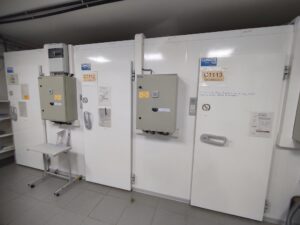
The GABP technical platform consists mainly of 13 climate chambers (3 to 5 m2 each) and 11 mobile climate chambers. These different structures enable arthropod models to be reared and experimented on at controlled temperature, lighting and humidity. The platform is also equipped with equipment specially dedicated to phenotyping: temperature-controlled fridges, video-tracking equipment, scales, binocular magnifiers and 3D printers.

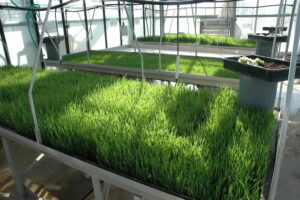
A greenhouse is integrated into the platform and is used to produce plant material for the phytophagous insects studied.
Operation and budget

The platform is accessible to all potential CBGP users and, secondarily, to external collaborators on specific joint projects. It is currently used for around ten research projects.

In addition to financial support from the community, users of the plateau pay an annual entrance fee and then a subscription fee based on the number of structures used. The platform therefore has its own budget, which is mainly funded by project sponsors. This budget can be supplemented by requests for equipment from our supervisory bodies.

Latest publications
Labbetoul A., Beaudet L. & Fellous S. 2025. Different effects of Drosophila suzukii oviposition and larval activity on fruit rot and mold. Entomologia Generalis 45 : 401-410. (https://dx.doi.org/10.1127/entomologia/2025/2773)
Guilhot* R., Xuéreb A. & Fellous S. 2025. Transmission of yeast and bacterial symbionts between sexual partners in Drosophila suzukii and Drosophila melanogaster. Royal Society Open Science 12 : 241149. (https://dx.doi.org/10.1098/rsos.241149)
Gard B., Bardel A., Douin M., Perrin B. & Tixier M.-S. 2025. Laboratory and field studies to assess the efficacy of the predatory mite Typhlodromus (Anthoseius) recki (Acari: Phytoseiidae) introduced via banker plants to control the mite pest Aculops lycopersici (Acari: Eriophyidae) on tomato. BioControl 70 : 179-191. (https://dx.doi.org/10.1007/s10526-024-10291-0)
Tabary* L., Navia D., Auger P., Migeon A., Navajas M. & Tixier M.-S. 2024. Plant, pest and predator interplay: tomato trichomes effects on Tetranychus urticae (Koch) and the predatory mite Typhlodromus (Anthoseius) recki Wainstein. Experimental and Applied Acarology 93 : 169-195. (https://dx.doi.org/10.1007/s10493-024-00917-4)
Cissé S., Leménager N., Piou C. & Niassy S. 2024. Quantitative analysis of behavioural phase difference in Locusta migratoria migratorioides (Reiche & Fairmaire, 1849) (Orthoptera, Acrididae) from the examination of spatial distribution patterns. International Journal of Tropical Insect Science 44 : 1427-1434. (https://dx.doi.org/10.1007/s42690-024-01236-2)
Rombaut* A., Gallet R., Qitout K., Samy M., Guilhot* R., Ghirardini P., Lazzaro B.P., Becher P.G., Xuéreb A., Gibert P. & Fellous S. 2023. Microbiota-mediated competition between Drosophila species. Microbiome 11 : 201. (https://dx.doi.org/10.1186/s40168-023-01617-8)