



With over a million described species, terrestrial arthropods alone make up more than a quarter of all known macroscopic organisms. They therefore play a fundamental role in the functioning of terrestrial ecosystems. In agro-ecosystems, insects can represent threats (crop pests, vectors of phytopathogenic agents) but they can also have a positive impact (predation and parasitism of pests, pollination).
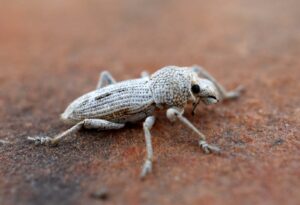 |
Terrestrial arthropods play a fundamental role in the functioning of terrestrial ecosystems.
|
We are currently witnessing a global and massive collapse in insect populations, both in terms of biomass and diversity, which is leading to a reduction in the ecosystem services provided by insects. At the same time, there are increasing problems linked to insect pests and the unintentional introduction of invasive species. In this context, it is imperative to be able to rapidly identify bio-aggressors or auxiliaries, to detect invasive species at an early stage, to characterise the networks of interspecific interactions in which these organisms are involved and to understand the biotic factors (e.g. host plants, associated organisms and competitors) and abiotic factors (climate, landscapes) that favour their establishment in ecosystems. Studying the dynamics of this biodiversity over wider time scales also provides key elements for understanding the factors that explain its current distribution. All this knowledge is needed to better anticipate and manage current and future phytosanitary crises.
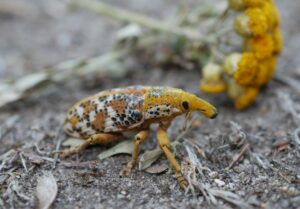
A major part of our research focuses on the systematics and phylogenomics of arthropods. By defining and naming taxa (species, genera, families), systematics makes it possible to establish a link between all the knowledge associated with them. Systematics is therefore fundamental to any study of ecology and evolution.
Systematics studies at CBGP bring together diverse data (from morphological, biological, ecological, genetic and genomic studies) in order to rigorously test hypotheses relating to the probability of the existence of species, to describe their biological characteristics and diagnostic elements and to provide identification tools.
Combined with phylogenetic studies, which describe the relationships between species, they enable: 1) taxonomic revisions to be carried out; 2) macro-evolutionary analyses to be carried out (e.g. reconstructions of ancestral traits, historical biogeography studies, diversification analyses). The latter make it possible to study the evolutionary trajectory of certain lineages (e.g. changes in insect diets, changes in their distribution areas) and to highlight the factors influencing the dynamics of biodiversity. For example, the history of associations with host plants in phytophagous insects and the influence of these associations on speciation processes are research questions common to several macroevolution research programmes conducted at CBGP.
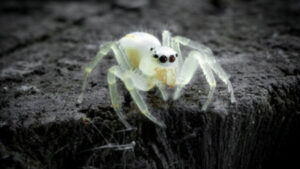
This research is based on extensive expertise in the taxonomy of various groups of agronomic importance (mites, Coleoptera, bugs, aphids, chalcidian Hymenoptera, noctuid moths, Thysanoptera and others) and a mastery of high-throughput sequencing technologies, which are integrated into barcoding programmes and phylogenomic approaches. Our research is also based on a collection of over one million specimens. This represents Europe’s leading collection of crop pests.
Our research also involves studying the biotic interactions in which arthropods are involved and understanding the factors that influence the evolution of these interactions.
By using metabarcoding approaches on DNA samples collected, for example, from the mouth parts or intestines of arthropods, or from insect traps, our research makes it possible to describe food webs (plants-arthropods-phytophagous arthropods-predatory or parasitoid arthropods-associated micro-organisms) and to identify all the arthropod vectors of a pathogen or assemblages of symbiotic or pathogenic micro-organisms of a pest. By comparing several contrasting environments (for example, plots managed in different ways), they can highlight the factors explaining variations in these networks of biotic associations. Work is currently being carried out on the networks of interactions between plants and insect vectors of Xylella fastidiosa, in order to characterise the environments that encourage the spread of the disease. Programmes on Mediterranean (e.g. vineyards) and African agrosystems are also underway to determine the agricultural management strategies best suited to the natural regulation of pest populations.
For certain study systems that can be maintained on farms (e.g. mites and thrips), experimental approaches under controlled conditions (in climatic chambers) are used to validate the inferences drawn from these empirical approaches. These approaches provide a more detailed understanding of the regulatory mechanisms in arthropod communities. All this work has major implications for the development of biocontrol strategies.
Phylogenetic approaches are also used to compare the evolutionary histories of lineages in long-term interactions (e.g. parasitoids and insect hosts, insects and endosymbiotic bacteria). These comparisons can be used to test either these associations are stable over large time scales or whether, on the contrary, they are characterised by recurrent jumps. These approaches are also important for gaining a better understanding of the evolution of insect diets and revealing new biological control agents.
Part of our research involves statistical approaches based on fauna and flora surveys, as well as climatic data, with the aim of gaining a better understanding of the distribution of arthropod biodiversity and ultimately predicting its evolution over short timescales and on a variety of spatial scales (countries, regions, plots). For example, spatial analyses of specific and functional diversity in communities of beetles and plants (at the interface between wild and cultivated environments) are currently being carried out to assess the effect of agricultural practices on this diversity.
Ecological niche modelling approaches on several study systems are also being developed in order to predict changes in the distribution of pests on regional or global scales in response to climate change and/or changes in land use.
Project manager: Carole Kerdelhué
Funding: PEPR FORESTT (France 2030)
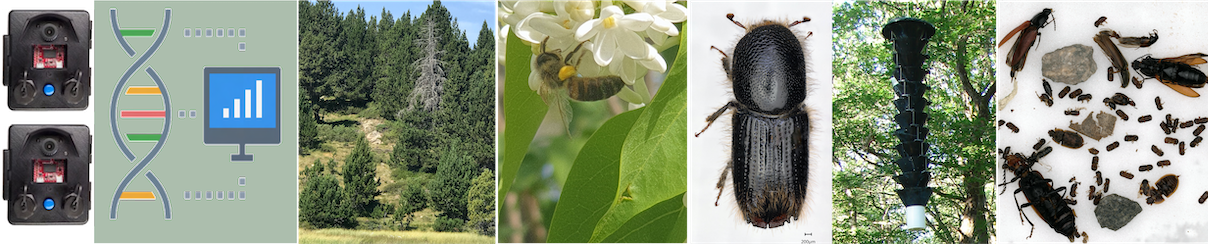
Monitoring entomological hyperdiversity faces obstacles that hinder its large-scale deployment. Given the importance of the taxonomic and functional diversity of forest insects and the pressures associated with global change, it is now imperative to deploy monitoring systems that combine long-term biodiversity tracking with biovigilance systems to ensure the early detection of emerging or invasive species. The MASSIF project aims to provide solutions by developing semi-automated tools for monitoring certain groups of xylophagous insects (bark beetles, longhorn beetles, jewel beetles, and their predators) and pollinators (wild bees and hoverflies). Its objectives are to:
https://www.pepr-forestt.org/projets/massif
Project manager: Astrid Cruaud
Funding: ANR Office Français de la Biodiversité dans le cadre du plan Ecophyto II+
This project aims to identify the factors favouring the natural regulation of arthropod pests (phytophagous and vectors) by auxiliary arthropods (predators and parasitoids) on two perennial crops (Citrus and Olea) around the Mediterranean and in Corsica. Arthropods are identified and counted using 1) real-time sequencing protocols with species assignment using a sequence database and 2) artificial intelligence (AI) image recognition models. This project involves the sectors, Bionomeex, a start-up specialising in AI, and two INRAE research teams.
https://ngsolicit.wixsite.com/ngs-olicit