

Area 3 - Ecology and evolution of zoonoses

Against a backdrop of increasing risks associated with infectious diseases of animal origin, we are seeking to gain a better understanding of the ecology and development of zoonoses whose reservoirs are small wild mammals such as rodents, shrews and chiropterans.
Head of area
BROUAT Carine
Carine BROUAT
Research Director, IRD

View profile

Our work focuses on identifying and assessing the influence of the determinants of transmission to humans, predicting the risks of disease emergence or re-emergence, and proposing solutions to limit the health impact of these diseases.

They are part of an EcoHealth-One Health continuum, with the ambition of taking into account all the agents involved in the ecology of infectious diseases, including reservoirs, vectors, pathogens and the microbiome, as well as the environment and factors linked to human behaviour and practices.

Our main areas of research include France, West Africa and Madagascar.

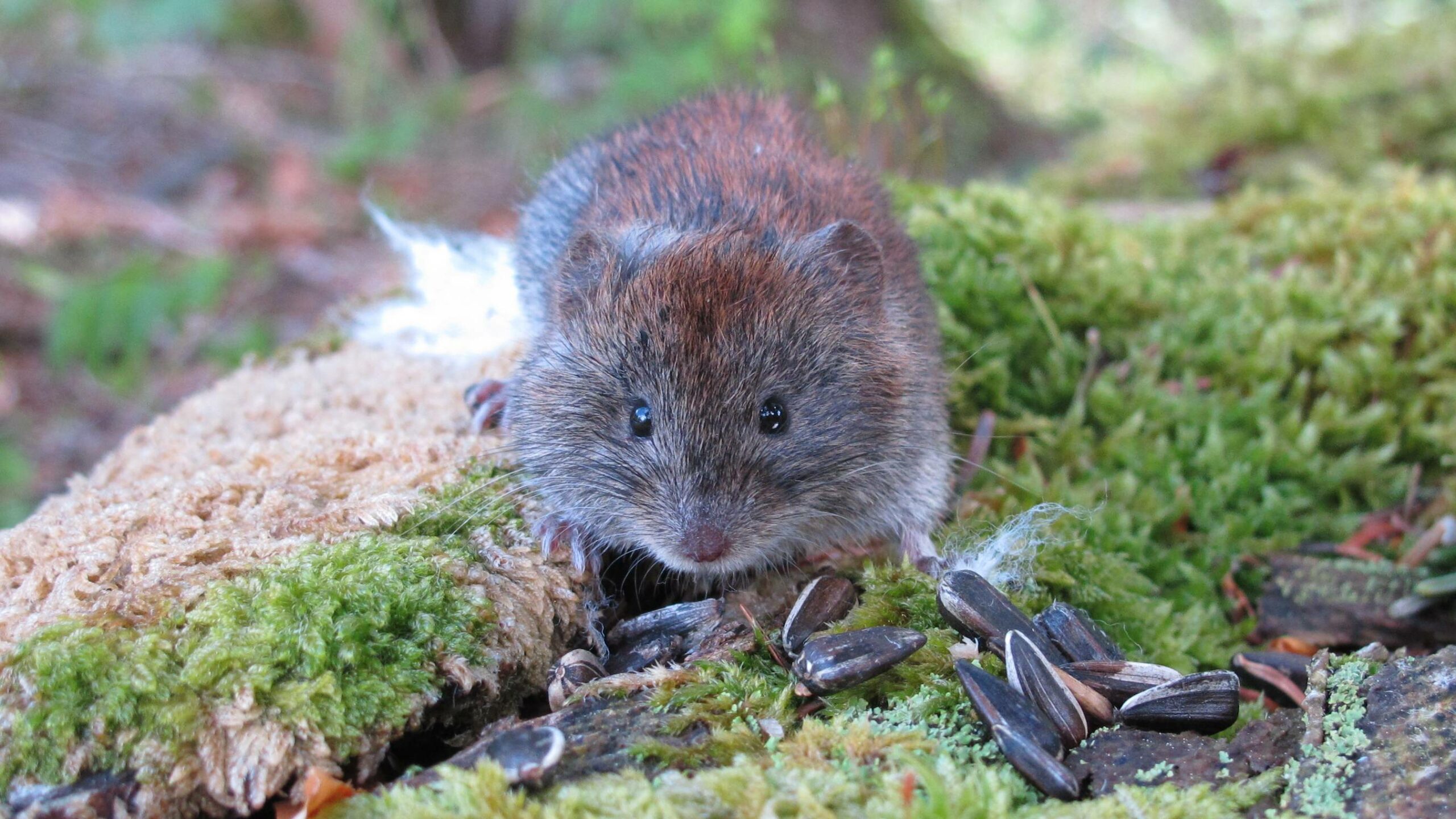
Clethrionomys glareolus, the Bank vole (© Laure Benoit)

Our work focuses on three main areas:

1. Characterisation of reservoirs, their microbiome, vectors and zoonotic agents in their environment
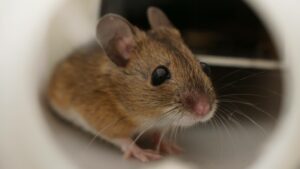
The wood mouse, Apodemus sylvaticus (© Alois Berard)

Health ecology must be based first and foremost on the precise characterisation of infectious systems. To do this, we use integrative taxonomy and genomics approaches to identify the taxa that make up mammalian reservoir assemblages, their microbiome and some of their ectoparasite vectors of zoonotic agents, such as fleas. We are increasingly internalising molecular and serological tools to detect and characterise pathogens such as leptospires, trypanosomes, hantaviruses and schistosomes. In addition, we have developed considerable expertise in describing microbial compartments as a whole, whether pathogenic or commensal, using high-throughput sequencing approaches.

This work is most often carried out as part of spatio-temporal monitoring carried out in a variety of ecosystems: towns, agro-ecosystems, forests and natural habitats. This enables us to gain a better understanding of the impact of major anthropogenic upheavals (e.g. transport, urbanisation, forest management methods, ecological transition) on small mammal faunas and the associated zoonotic risks.

Our expertise in population genetics and genomics also enables us to describe the spatial structuring of reservoirs and vectors, infer their demographic dynamics and test biological invasion scenarios. To do this, we use approaches based on molecular markers such as microsatellite genotyping, sequencing and high-throughput genotyping, as well as innovative analytical approaches such as random forest, DIY-ABC and MAPPI.

2. The evolutionary ecology of interactions in host-pathogen systems
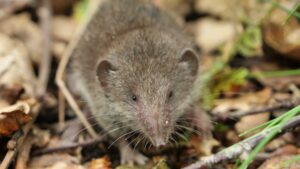
The greater white-toothed shrew, Crocidura russula (® Alois Berard)

It is now well established that pathogens evolve within diverse microbial communities, both commensal and pathogenic, on both intra- and inter-host scales. Describing the biotic environment of pathogens and their reservoirs is an essential prerequisite for studying the influence of interactions on the severity of diseases, as well as on their epidemiological and evolutionary dynamics. One of our aims is therefore to characterise the host-parasite-microbiota interaction networks in populations and natural communities of small mammals. To do this, we are developing approaches to study the stability, vulnerability or resilience of these interaction networks in the face of global change, and to identify the key elements in the transmission dynamics of pathogens.

Our research also aims to gain a better understanding of the ecological and evolutionary processes that shape host-pathogen interactions and explain the persistence, emergence and re-emergence of zoonoses. This work involves immunoecology and phylogenomics, population genomics and transcriptomics approaches, carried out on natural populations (or in controlled environments via collaborations). This involves, for example, assessing whether intra- and inter-host viral diversity affects the transmission of hantaviruses, or studying the variability of the host immune phenotype and its response (sensitivity, resistance or tolerance) to different pathogens (hantavirus; murine Plasmodium; Yersinia pestis). Here again, we are relying on the development of « omics » approaches to simultaneously analyse different immune pathways and characterise the genetic architecture of the response. This involves identifying the genetic characteristics of hosts and pathogens that are involved in virulence, particularly in the case of the Puumala hantavirus. We are also studying the evolution of this virulence, for example in the context of a change of host for Toxoplasma or murine Plasmodium, or a change in the small mammal community or microbiome for Puumala hantavirus.

3. Generating knowledge to predict zoonotic risks and develop strategies to control reservoirs
The greater white-toothed shrew, Crocidura russula (® Alois Berard)

As reservoirs, small mammals, particularly rodents, are an important target for controlling many zoonotic diseases affecting humans. Several of our projects are therefore aimed at proposing and evaluating strategies for managing these reservoirs in consultation with the various stakeholders, including international organisations, political and socio-economic players, local residents and at-risk groups.

For example, several ongoing projects in Europe and Africa aim to understand the risk of exposure of certain sections of the public to pathogens transmitted by small mammals. To do this, we are trying to determine the spatio-temporal distribution of zoonotic agents (e.g. Leptospira, hantavirus, Borrelia crocidurae, Yersinia pestis, Schistosoma spp.) on an ecosystem scale, in relation to socio-environmental factors (e.g. landscape, livestock farming, uses). These approaches enable us to map the risk over time and space (e.g. monitoring of the Puumala virus in France), to alert the health authorities (e.g. leptospirosis and hantavirus Seoul in Benin) and to direct surveillance accordingly (e.g. monitoring of the Hantavirus in the Netherlands). (e.g. setting up a port environmental monitoring platform in Benin) or control strategies – Ecologically-Based Rodent Management pilot project in Niger, Benin, Ethiopia and Madagascar).

To carry out all this work, we draw heavily on the expertise of our molecular biology, collections and IT technical platforms. We have also developed a vast network of collaborators in France, Europe and Africa, both academic (e.g. partner UMRs and universities, ANSES, Instituts Pasteur, WHO National Reference Centres) and operational (e.g. hospitals, companies, health-environment departments of various towns, ONF), political (e.g. ministries) or civil society (e.g. NGOs, participatory groups, associations).

News from the area
Ganem G., Dufour C.M.S., Avenant N.L., Berthier K., Loiseau A., Caminade P., Pillay N. & Brouat C. 2026. Rare interspecific hybridisation between sympatric African four-striped mice, and indications of fine-scale intraspecific spatial structure related to social factors. Journal of Vertebrate Biology 75 : 25073. (https://dx.doi.org/10.25225/jvb.25073)
El Jamaai J., Taheri A., Ballesteros-Mejia L., Ahmed D.A., Bang A., Diagne C., Courchamp F. & Angulo E. 2026. Biological invasions and their potential economic costs in Morocco. Scientific Reports 16 : 2011. (https://dx.doi.org/10.1038/s41598-025-31767-8)
Parany M.N.J., Stenseth N.C., Rasoamalala F., Rahelinirina S., Rahajandraibe S., Andrianaivoarimanana V., Dobigny G., Gorge O., Valade E., Fell H., Ramasindrazana B. & Rajerison M. 2026. Plague in small mammals from an endemic focus of the Malagasy Central Highlands: a longitudinal survey with a special reference on black rats (Rattus rattus). Integrative Zoology 21 : 37-47. (https://dx.doi.org/10.1111/1749-4877.12944)
Atteynine S.A., Bertrand M., Dembélé A., Coulibaly F., Diagne C. & Granjon L. 2026. Tempo and mode in biological invasions: exotic rodents in the small mammal community of Bamako (Mali). Mammalian Biology 106 : 129-146. (https://dx.doi.org/10.1007/s42991-025-00542-7)
Ndiaye P.I., Duboz P., Diagne C., Granjon L., Licata F., Diallo A., Medina-Serrano N., Sagna M.B., Hossaert-McKey M., Guisse A., Boëtsch G. & McKey D. 2026. Ten years of research on the biodiversity of the Great Green Wall by the International Human-Environment observatory Téssékéré in Senegal. Comptes Rendus Géoscience 356 : 1-16. (https://dx.doi.org/10.5802/crgeos.321)
Savassi B., Kincaid-Smith J., Courtin D., Ibikounle M., Toulza E., Galinier R., Milet J., Gineau L., Garcia A., Houngnihin R., Blin M., Brouat C., Liang S. & Boissier J. 2026. African zoonotic schistosomiasis: a paradigm shift. Philosophical Transactions of the Royal Society B: Biological Sciences 381 : 20240522. (https://dx.doi.org/10.1098/rstb.2024.0522)
Luviano-Aparicio N., Mathieu-Begne E., Kincaid-Smith J., Rey O., Picard M., Chaparro C., Allienne J.F., Rognon A., Polack B., Vallee I., Thomas M., Boissier J. & Toulza E. 2026. Transcriptomic plasticity in hybrid schistosomes can contribute to their zoonotic potential. Philosophical Transactions of the Royal Society B: Biological Sciences 381 : 20240534. (https://dx.doi.org/10.1098/rstb.2024.0534)
Arnal A., Gozlan R.E., Charbonnel N., Bouilloud* M., Chaves A., Gauthier-Clerc M., Vigueras-Galván A.L., Arnathau C., Roiz D., Bento A.I., Morand S., Walzer C., Suzán G., Sarmiento Silva R.E. & Roche B. 2025. Leveraging small biodiversity reserves to prevent zoonotic disease: insights from dilution effect and pathogen adaptation theories. Disease Biology, Genetics, and Socioecology : 6. (https://dx.doi.org/10.53941/dbgs.2025.100006)
Dispan de Floran L., Mergey M., Galan M., Vitte I., Jouanillou A., Le Barh M., Guinard E., Lesbarrères D. & Helder R. 2025. Variability in the impact of linear transportation infrastructures on gene flow in French wild ungulate populations. Landscape Ecology 40 : 31. (https://dx.doi.org/10.1007/s10980-025-02052-w)
Etougbétché* J., Houéménou G., Missihoun A., Gauthier P., Dossou H.J., Lokman G., Dalecky A., Diagne A., Dobigny G. & Mercier A. 2025. Toxoplasma gondii and Trypanosoma lewisi infection in urban small mammals from Cotonou, Benin, with special emphasis on co-infection patterns. Transboundary and Emerging Diseases 205 : e9976509. (https://dx.doi.org/10.1155/tbed/9976509)

BePRep

Identification of best practices for biodiversity recovery and public health interventions to prevent future epidemics and pandemics

Project manager: Nathalie Charbonnel
Funding : European union (HORIZON RIA, call HORIZON-CL6-2021-BIODIV-01-11)

The BEPREP project aims to identify ecological restoration strategies with mutual benefits for biodiversity and health, with a view to ultimately promoting ‘nature-based solutions’ as major tools for preventing zoonotic epidemics.

https://www.beprep-project.eu/

2022 - 2027​

DEBS-Plague

Deciphering the environmental, biological and societal factors driving the risk of plague reemergence in France

Project managers: Gauthier Dobigny & Florent Sebbane (Institut Pasteur, Lille)
Funding PEPR Emerging infectious diseases

DEBS-Plague aims at gathering historians, archaelogists, biologists, soil scientists and mathematicians in order to investigate the respective roles of animal reservoir and flea vector diversity.bacterial genome evolution and soil physcio-chemical characteristics in the risk of of plague (re)location, circulation and (re)emergence in French territories, with Madagascar used as reference current endemic region.

2024 - 2028

ECOZOON

Une approche ECOhealth pour atténuer les expositions ZOOnotiques liés aux rongeurs et promouvoir une urbanisation durable au nord Sénégal

Project manager: Christophe Diagne
Funding: Agence Nationale de la Recherche (ANR)

ECOZOON aims to understand the mechanisms of human exposure to rodent borne infectious diseases and to develop science-based solutions for a sustainable urban transition resilient to rodent-borne zoonoses in North Senegal. At the interface of health anthropology, urban geography, integrative health ecology and participatory modelling, ECOZOON adopts an integrative, comparative EcoHealth approach across 10 localities carefully selected to reflect the spectrum of rural-to-urban landscapes in North Senegal. The specific objectives are to (i) enhance our understanding of the links between socio-environmental factors, rodent ecology, and zoonotic risks during urban transitions; (ii) investigate, for the first time in natural populations, the relationships between multiple co-infections, immune responses, and exposure to environmental contaminants in shaping zoonotic hazards within rodent reservoirs; and (iii) inform interventions and policy while identifying locally adapted, actionable measures for urban policymakers, public health operators and local communities.

https://anr.fr/en/funded-projects-and-impact/funded-projects/project/funded/project/b2d9d3668f92a3b9fbbf7866072501ef-7c7dc56088/?tx_anrprojects_funded%5Bcontroller%5D=Funded&cHash=f418333cf2767c25488c7ef6d23f3a52

2025-2029

EctoPeste

Evaluation of the ectocide fluralaner administered to Rattus rattus rats for the control of the flea Xenopsylla cheopis, a vector of Yersinia pestis

Project managers: Gauthier Dobigny & Karine Mouline (IRD, UMR Mivegec)
Funding: Défi Clé Riv’Oc

The aim of EctoPeste is to establish proof of concept for the efficacy and optimum conditions for formulating rodent baits enriched with a systemic insecticide to control their flea, Xenopsyllla cheopis, the main vector of plague in Madagascar.
2024 - 2026

HANTARIS

Seoul HANTavirus Associated RISk in Cotonou

Project manager: Guillaume Castel
Funding: PNR Est (ANSES)

The aim of HANTARIS is to study the circulation of the Seoul virus hantavirus in rats in the port city of Cotonou (Benin). The genetic variability of the strains detected will be characterised and any human contamination will be investigated among port workers.

2023 - 2026​

LeptoNEx

Leptospires et Nexus d’Exposition : interactions entre les humains, les chiens, les ragondins et l’environnement

Project manager: Nathalie Charbonnel
Funfing: ExposUM

Our project proposes an integrative study of the leptospires exposome within a strong One Health framework. By integrating human, animal (coypu and dog), and environmental dimensions, it will clarify each compartment’s role in leptospires circulation, identify exposure risk factors, and support prevention strategies. The study focuses on two watersheds near Montpellier, the Lez and Or, covering urban and peri-urban zones where human–dog–coypu interactions are frequent, varied, and understudied. By integrating ecology, epidemiology, environmental health, social sciences, and mathematical modeling, this interdisciplinary and transdisciplinary project will generate new insights into leptospires transmission in urban areas and species interactions under global change.

https://leptonex.netlify.app

2025-2029

MICETRAL

Invasive mice and rodent malaria in Africa: dissecting a natural parasite host shift involving two well-studied laboratory models

Project manager: Carine Brouat & Franck Prugnolles, IRL REHABS
Funding: ANR

The MICETRAL project aims to understand how murine malaria parasites may have changed host (from a native rodent to an invasive exotic rodent: the house mouse in Gabon). Following problems with parasite sampling, the project is currently refocusing on studying the dynamics of the invasion of the house mouse in Africa, and its health consequences.

2020 - 2026

MOUTONS

Monitoring des Ovins domestiques, Urbanisation, Tiques, ONgulés sauvages et Santé

Projet manager : J. Louvrier (contact Julien Pradel & Nathalie Charbonnel)
Funding: Univ. Montpellier, INRAE-SA

This project aims to assess the dynamics of biodiversity, pathogen transmission, and their vectors in and around domestic sheep farms located along an urbanization gradient in the Montpellier region. Through the installation of camera traps, the collection of biological samples (blood, feces, vector arthropods), and the analysis of these samples to detect pathogens, we will explore wildlife-livestock interactions and their health implications.

2026-2027

PLAY-MAD

Plague in the city: an interdisciplinary approach in Madagascar

Project manager: Gauthier Dobigny
Funding: Agence Nationale de la Recherche (AAP 2024)

Plague is endemic in Madagascar, where it is generally regarded as an essentially rural disease. However, recurrent cases of human bubonic plague in Malagasy cities suggest the possible existence of an urban cycle of the disease, which could open the door to future large-scale epidemics that are difficult to control. Unfortunately, no study of the factors suspected of strongly influencing the persistence and emergence of plague in rural Madagascar has ever been carried out in an urban environment.

Bringing together teams from CBGP, SESSTIM, TETIS and the Instituts Pasteur in Paris and Madagascar, PLAY-MAD aims to bring together health ecology, population genomics, bacteriology and geography to produce the first assessment of the risk of plague in an urban socio-ecosystem, in this case in Antananarivo, the capital of the Grande Ile.
2025 - 2028​

PPSE

Port of Cotonou Environmental Monitoring Platform, Benin

Project leader: Gauthier Dobigny
Funding: Enabel (Belgique) & Port Autonome de Cotonou

In Africa, data on socio-environmental and economic consequences of invasive species remain rare. Accordingly, the involvement of operational and political stakeholders is low, when not inexistent. In Cotonou, Benin, collaborative pluridisciplinary researches were conducted by French and Beninese academics, thus highlighting invasive species associated risks as well as providing practical recommendations for a better preventive management of biological invasions.

From there, the Cotonou International Seaport authorities have engaged into a partnership-based process with French (IRD), Beninese (UAC, CREC) and international (IITA) scientific groups in order to set up the first Portuary Platform of Environmental Surveillance (PPES) in Africa. PPES activities are currently run by a team of young beninese researchers who:

  1. monitor terrestrial (rodents and mosquitoes that may carry human pathogens, and arthropods that may be detrimental to crops and food stocks) and marine (zooplankton and macro-invertebrates) biodiversity within the seaport ;
  2. evaluate the resistance to pesticides of seaport populations of insects and rodents ;
  3. test alternative and sustainable approaches to pest species management ;
  4. sensitize non academic stakeholders to biological invasion-associated challenges as well as to operational good practices.

2020-2028

PREACTS-AfriCam Senegal

PREZODE in action in the global South – Africa & Cambodgia (Senegal version)

Project managers: Laurent Granjon & Christophe Diagne
Funding: Agence française de développement (AFD)

The general objective is to co-construct locally an integrated information system to help identify, reduce and prevent episodes of emergence and spread of zoonotic diseases at the human-animal-environment interface, while taking into account the socio-economic impact and sustainability of the solutions identified.

https://www.ird.fr/lancement-globale-du-projet-africam-pour-la-detection-precoce-des-maladies-emergentes

2023 - 2026​

RoCoCity

Rodent control in the city: health ecology and (re)exposure to rodent-borne infectious agents and vectors

Project manager: Gauthier Dobigny
Funding: ANR and Région Occitanie via Institut Expos’UM

The project RoCoCity aims to investigate the impacts of rodent management on spatial and temporal changes in zoonotic exposome through several case studies conducted in French (Montpellier and Lyon zoos) and African (city markets in Senegal and Madagascar; an international seaport in Benin) urban socio-ecosystems.

2024 - 2026​

SentiRUb

A study of the role of semi-domestic rodents as sentinels for antibiotic resistance in urban environments within the framework of a ‘One Health’ approach

Project manager: Djelouadji Zorée (contact Nathalie Charbonnel)
Funding: DGAL – Ecoantibio

The project aims to study the carriage of multidrug-resistant bacteria (MDRB) in rodents found in urban areas, as part of a localized One Health approach (Lyon metropolitan area). More specifically, it will enable us to analyze, on the one hand, the potential of rodents as reservoirs, sentinels, vectors, and evolutionary hubs for AMR, and, on the other hand, to assess the value of implementing surveillance in these species in light of the AMR patterns detected in humans, dogs, and the environment at the same study sites. Finally, it will provide new insights into the dynamics of transmission and/or spread of antibiotic resistance.

2026-2029

vRA-SEM

Santé et Environnement dans la ville de Mahajanga, Madagascar : volet de Recherche-Action

Project manager: Gauthier Dobigny
Funding : GESCOD (AFD, decentralised cooperation)

Project « Santé et Environnement à Mahajanga » (SEM) forms part of the decentralised cooperation initiative between the city of Mulhouse and the Urban Municipality of Mahajanga, through the multi-stakeholder network Grand Est Solidarités et Coopérations pour le Développement. It aims to improve the health of Mahajanga’s residents and protect their environment by strengthening sanitation policies, supporting healthcare facilities and promoting civil protection.

This project is a continuation of the project ASSMA (Assainissement à Mahajanga) carried out between 2013 and 2018, which involved the installation of sanitation infrastructure and an assessment of the impact of the facilities on public health. For this study, an action research component (vRA) will be led by the Pasteur Institute of Madagascar and its institutional partners (the University of Antananarivo, IRD and CIRAD). vRA-SEM involves monitoring the impact on the target populations of the actions undertaken as part of the SEm project.

2024-2026